29 August 2026
Visual identity is more than a logo
Discover how a well-thought-out visual identity makes your event an unforgettable experience and why a logo alone is not enough.
The logo is only the beginning
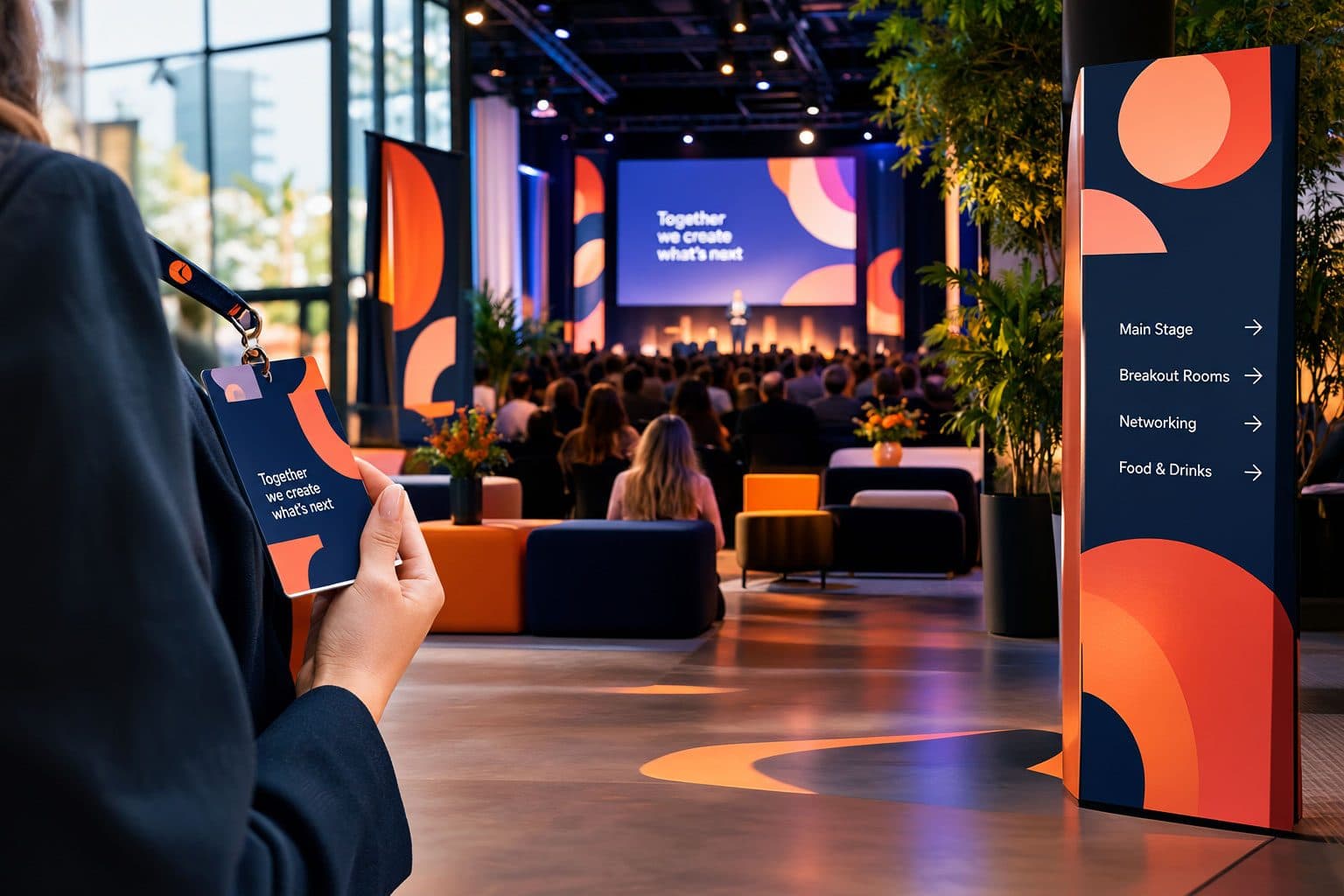
When you organise an event, your logo is often the first thing you think of. But a logo alone does not create an experience. Visitors step into a world that you create with colours, typography, materials, light, sound and even scent. All these elements together form the visual identity of your event. It is the common thread that ensures everything fits and stays with people.
Think of a festival like Lowlands. The logo is recognisable, but the real power lies in the total experience: the posters, the stages, the signage, the merchandise. That consistency creates a sense of unity and strengthens the brand experience. Without that unity, an event feels like separate parts that happen to take place in the same location. Visitors then feel less involved and take less home with them.
A visual identity starts with a clear concept. What is the story of your event? What do you want people to feel? Only then come the visual choices. This prevents you from having lots of beautiful separate ideas that are not connected.
Consistency creates recognition and trust
Recognition is the key to trust. If your event speaks the same visual language at every touchpoint, visitors know what to expect. That starts with the Save the Date, the website, the social media posts, right through to the entrance and the toilet signs. That repetition creates a feeling of professionalism and reliability.
Imagine: you receive an invitation with a certain use of colour and typography. On arrival, the location turns out to be in a completely different style. That feels confusing and messy. Consistency does not mean that everything looks the same, but that all expressions clearly belong together. A strong example is the annual Dutch Design Week. Everywhere in Eindhoven you see the same visual elements, from the map to the banners. As a result, you know immediately: this is DDW.
For your event, this means that you create a visual guide. Establish which colours, fonts, image style and materials you use. Share it with your team, suppliers and partners. That way everyone stays on the same page and you radiate unity.
Enhancing the experience with all the senses
A visual identity is not limited to what you see. It is precisely the combination with other senses that makes an event unforgettable. Scent, sound and texture can reinforce the visual message. A brand with a fresh, minimalist look can, for example, use light music and a subtle citrus scent. A warm and artisanal brand is more likely to choose wood textures and calming sounds.
Think about the entrance to your event. Is there a clear visual transition? Perhaps a gate, a cloth, a tunnel of light? Such moments create a feeling of 'I am now stepping into somewhere'. That increases engagement. The routing, the signage and the decoration of spaces also contribute to the experience. If they are visually right, a visitor feels safe and at ease.
A practical tip: walk through your event yourself as a visitor. Where do you look first? Which impression stays with you? Often you then see that certain visual elements are missing or are distracting. By making that journey, you can improve in a targeted way.
From concept to execution: this is how you approach it
A strong visual identity starts with a moodboard. Collect images, colours, materials and words that express the feeling of your event. Discuss this with your team and your designer. This creates a shared vision. Then you translate that into concrete applications: invitations, website, social media, decor, signage, merchandise and even the clothing of your crew.
Make sure you have a downloadable package with all the visual guidelines. It states exactly how logos are used, which colour codes are correct and which typography you use. That prevents suppliers or partners from inventing something themselves. It also saves you a lot of time and hassle afterwards.
Finally: measure the impact. Ask visitors about their experience. Look at social media: which photos are shared? Often you see that a consistent visual identity leads to more user-generated content. People share what is beautiful and recognisable. That way your event becomes not just a day, but a brand that keeps on living.
Want to know more?
Curious what Custom Way Design can do for you in the field of flyer design?
View Flyer designGet in touch
Want to discuss an assignment or project? Tell us what you are working on — we reply within two working days.
Get in touch